
Home / Types of Shutters / Motorised
Type 04 · any shutter, driven
Motorised shutters Newcastle
Past arm's reach, a motor is the difference between a feature and a chore. We treat motorisation as a first-class specification, because the city's new homes keep raising glass higher and wider than arms go.
Specified for the opening, not for the gadget shelf.
A motor is the right call when the opening itself defeats a hand:
- High glass: stairwell voids, double-height living walls, clerestory windows above the kitchen bench. If you would need a ladder, you need a motor.
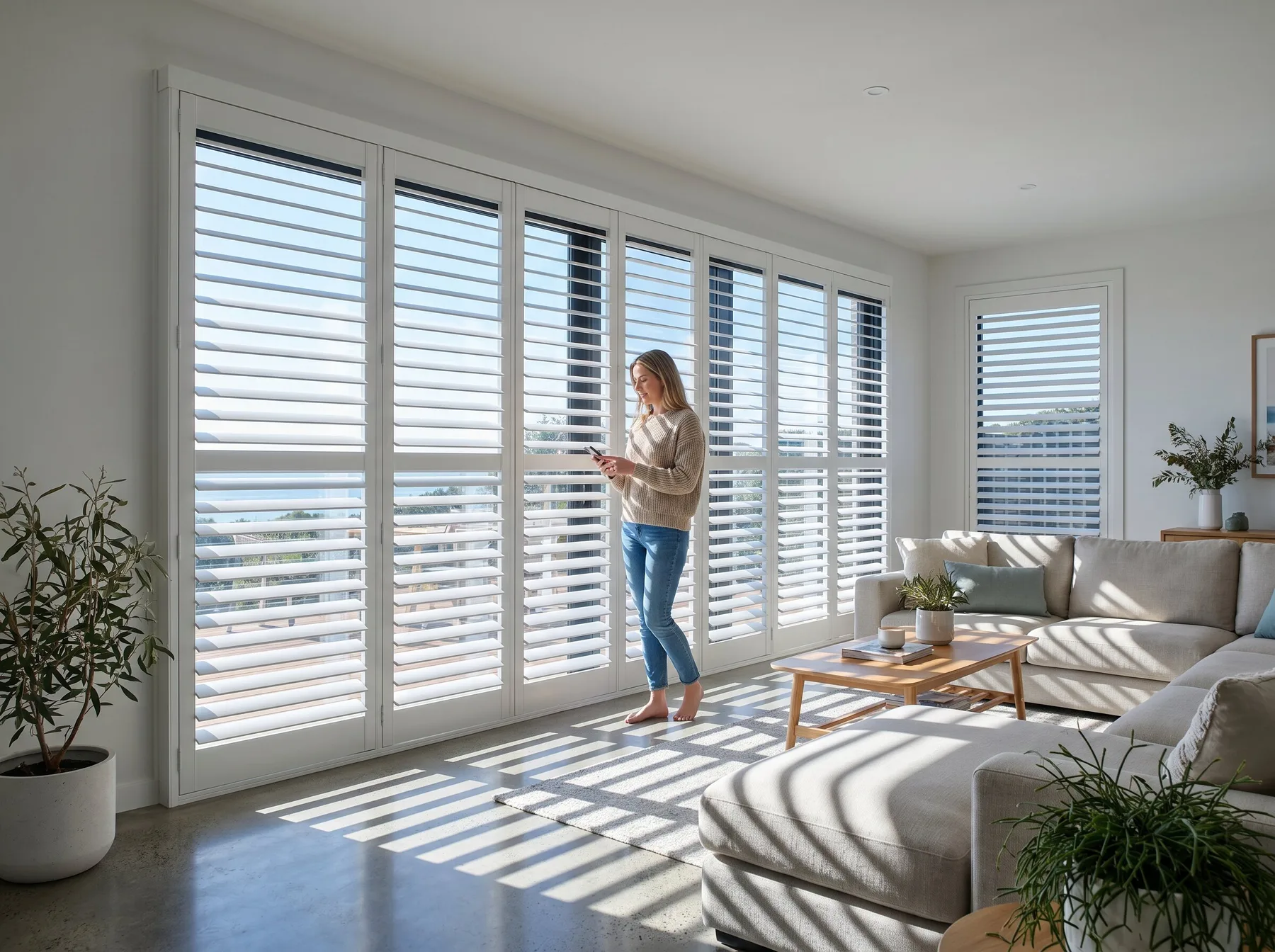
- Wide runs: a wall of stacker doors carrying bypass or bi-fold plantation panels moves as one set instead of panel by panel.
- Many at once: the whole western elevation closing before the 4pm sun lands, on one press or one schedule.
- Reach and mobility: behind a bath, over a kitchen sink, or simply when bending and reaching is the thing you are designing out of the house.
The tilt you use is the tilt you get value from. Motorised shutters get used.
Control, in plain terms
Four ways to drive a shutter, from simplest to most connected: a hand-held remote (one per room or one for the house); a wall switch where a light switch would be; a phone app for whole-home control and away-from-home checks; and schedules, where the shutters follow the day without being asked. Most homes land on a mix, and we wire nothing you will not use.
The wiring question, answered early
Interior tilt motors are compact and run on rechargeable or wired supply; roller shutters take a wired tube motor in the box above the glass. New builds rough the wiring in before plaster, which is why we like to see the window schedule at frame stage. Renovations usually run rechargeable tilt motors and avoid the chase entirely. Which suits your home is a measure-visit conversation, not a guess.
Smart-home integration is specified generically at the measure: tell us what runs your house and we will spec a drive that plays with it, without promising a brand from a web page.
Which shutters can be motorised?
All three of the others: plantation tilt (interior), aluminium louvres (exterior) and roller curtains. The motor is a spec line on the same made-to-measure order, not a different product.
Blackouts and batteries
Every motorised unit keeps a manual path: tilt motors release to hand operation and roller motors carry a manual override. Rechargeable tilt batteries run months between top-ups on normal use.
Motorisation questions, answered straight
Can I motorise shutters I already have?
Often, yes, if the panels and frames are sound; some tilt systems retrofit cleanly. Bring it to the free measure and we will give you a straight yes or no at the window.
Is the motor noisy?
Modern tilt and tube motors run quietly enough for bedrooms; you will hear a low hum for a few seconds, not a rattle. Ask for a demonstration at the measure.
Does motorising cost much more?
It adds the drive and controls to the same made-to-measure order; the quote at your free measure prices the shutter and the motor line by line so you can decide opening by opening. Many homes motorise the high glass and hand-operate the rest.
Free in-home measure & quote
Every window is bespoke. The quote starts at your place, not ours.
A specialist measures each opening, talks through material, louvre width and tilt for your rooms and your exposure, and leaves you a written quote. Nothing is made until the figures are checked on site.
Form only. We reply to arrange a time that suits.